When a vehicle needs structural repair
Most cars and SUVs today don't have a separate frame. They have a unibody, where the body itself is the structure. Trucks often still sit on a frame. Either way, a hard enough hit can push the structure out of position, and that's what frame straightening fixes.
Signs worth checking after a crash:
- Doors, the hood or the trunk don't close or line up like they used to
- Gaps between panels look uneven from one side to the other
- The vehicle pulls to one side or the steering wheel sits off centre
- Tires start wearing unevenly
- One corner sits lower than the others
Hard hits like side impacts and rear impacts are common causes. Our guide to frame damage after a collision goes deeper.
How frame straightening works
- Measure. The vehicle is measured at set points and compared with the manufacturer's specifications. That shows exactly where the structure moved and by how much.
- Pull. The vehicle is anchored and damaged areas are pulled back into position in controlled steps, with measuring along the way.
- Replace what shouldn't be straightened. Some structural parts are meant to be replaced, not pulled, and the manufacturer's repair procedures say which.
- Measure again. A final check confirms the structure is back within specification before panels and paint go on.
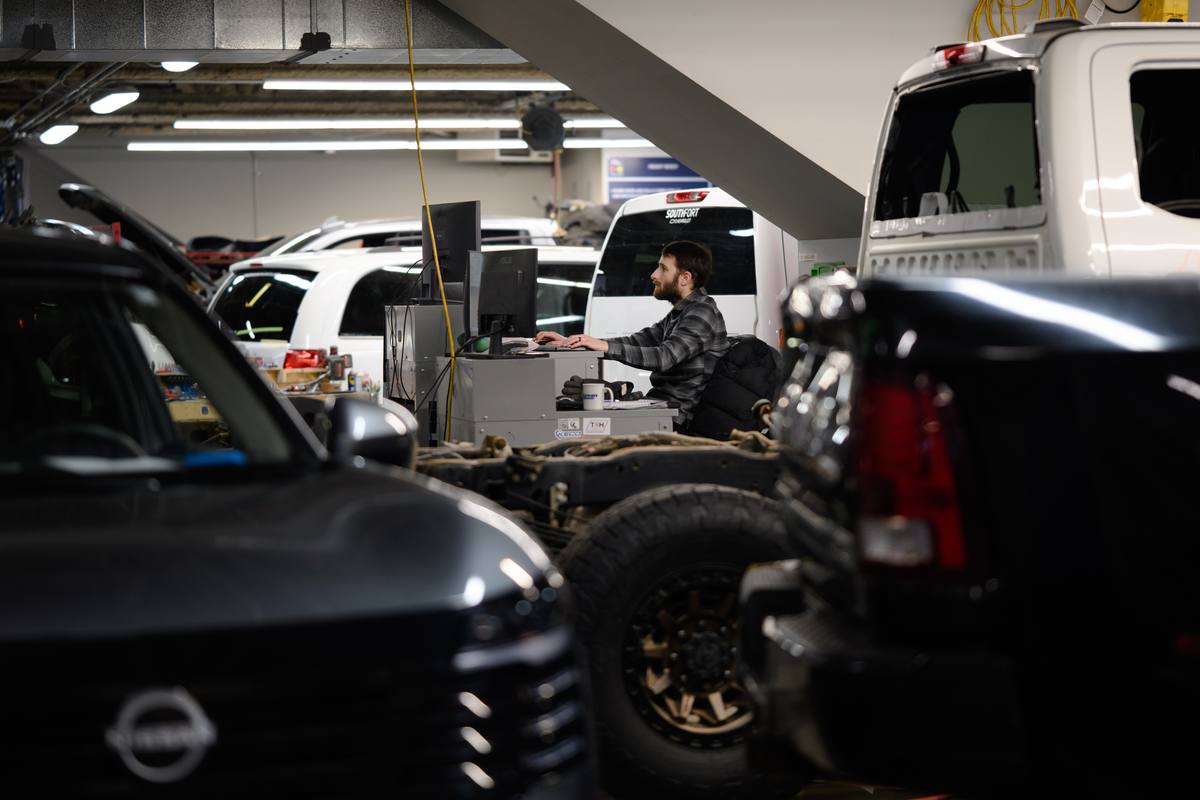
Fix Auto Sherwood North does structural and frame repair in house, using Wedge Clamp pulling equipment and computerized measuring.
Why it matters for safety
Crumple zones, airbags and seat belt systems are designed around the vehicle's structure. If that structure is out of position, they may not work as designed in the next crash. It also affects how the vehicle tracks, how the tires wear, and where cameras and sensors are aimed. After structural work, wheel alignment and any sensor calibration are coordinated through the shop's trusted partners, so you pick up one finished vehicle.
Questions to ask the shop
- Will you measure the vehicle before and after the repair?
- Can I see the measurement results?
- Are you following the manufacturer's repair procedures?
- Which parts will be straightened and which will be replaced?
- What does the warranty cover?
Will insurance pay for it?
If the damage came from a collision and you have collision coverage, structural repair is part of the claim. If the repair cost gets close to the vehicle's value, the insurer may call it a total loss instead. Structural repairs are also the damage most likely to affect resale value, so keep every piece of paperwork, including the measurements.
For a free written estimate, call Fix Auto Sherwood North at (780) 416-3158. The shop is just north of Millennium Place, off Highway 16.